
Introduction
Choosing the right outfit is not only about wearing expensive or trendy clothes, but it is also about how well you combine colors. A strong understanding of a color combination guide for clothes can completely change the way you present yourself. Many people struggle with matching outfits, which often leads to confusion and less confidence in dressing.
Color plays a powerful role in fashion. It affects mood, personality, and even the impression you leave on others. When you understand how colors work together, dressing becomes easier and more creative. You do not need to be a fashion designer to look stylish; you just need simple knowledge and practice.
This article will help you master the color combination guide for clothes in a very easy and practical way. Whether you are a beginner or someone with basic fashion knowledge, these tips will help you build better outfits for daily wear, office looks, parties, and casual events.
What is Color Combination Guide for Clothes?
A color combination guide for clothes is a set of principles and techniques that help you match different colors in your outfit in a visually appealing way. It explains which colors work well together and which combinations should be avoided.
In fashion, colors are usually divided into categories such as primary, secondary, warm, and cool tones. Understanding these basics helps you build balanced outfits. For example, blue pairs well with white, black goes with almost everything, and earthy tones like brown and beige create a soft natural look.
This guide is not a strict rulebook but a helpful framework. It allows you to express your personality while still looking well-dressed. The goal is to create harmony in your outfit so that nothing looks too loud or too dull.
When you follow a proper color combination guide for clothes, your wardrobe becomes more flexible. You can mix and match fewer clothes to create multiple stylish outfits. This saves time, money, and effort while improving your fashion sense.
Why is Color Combination Guide for Clothes Important?
Understanding a color combination guide for clothes is important because it directly affects your overall appearance. Even expensive clothing can look unappealing if colors are not matched properly.
First impressions matter a lot, especially in social and professional settings. The right color combination helps you look confident, clean, and organized. On the other hand, poor color choices may make your outfit look messy or unbalanced.
Colors also influence emotions. For example, blue gives a calm and professional look, red shows confidence and energy, and white represents simplicity and cleanliness. Knowing this helps you choose outfits based on the situation.
Another important reason is wardrobe efficiency. When you understand color coordination, you can mix fewer clothes in many ways. This makes your wardrobe more practical and budget-friendly.
Lastly, it improves personal style. A good color combination guide for clothes helps you develop your own fashion identity instead of blindly following trends. It teaches you how to look good in your own unique way.
Detailed Step-by-Step Guide
Step 1: Understand Basic Color Theory
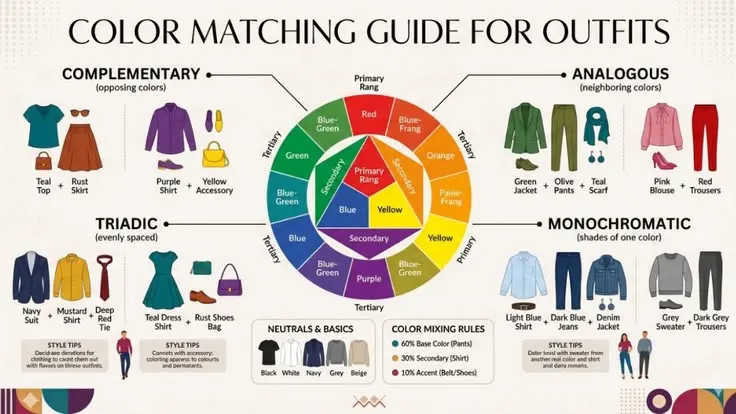
Before applying any color combination guide for clothes, you must understand basic color theory. Colors are divided into:
- Primary colors: red, blue, yellow
- Secondary colors: green, orange, purple
- Neutral colors: black, white, grey, beige
These categories help you decide which colors can be matched easily.
Step 2: Start with Neutral Colors
Neutral colors are the safest choice in fashion. Black, white, grey, and beige can be paired with almost any other color. For beginners, starting with neutrals makes styling easier and more confident.
For example:
- Black shirt with blue jeans
- White t-shirt with olive pants
- Grey hoodie with black trousers
Step 3: Use Complementary Colors
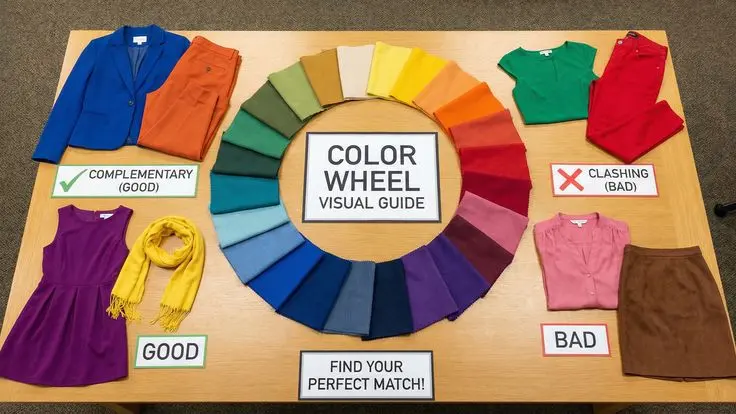
Complementary colors are opposite on the color wheel. They create strong contrast and stylish looks. Examples include:
- Blue and orange
- Red and green
- Yellow and purple
Use them carefully to avoid over-styling.
Step 4: Try Monochrome Outfits
Monochrome dressing means wearing different shades of the same color. This is one of the easiest ways to follow a color combination guide for clothes.
For example:
- Light blue shirt with dark blue jeans
- Beige top with brown trousers
It looks modern and elegant.
Step 5: Balance Bright and Soft Colors
If you wear bright colors, balance them with soft or neutral tones. For example, a red shirt can be paired with black or white pants. This keeps your outfit visually balanced.
Step 6: Follow the 3-Color Rule
Never use more than three main colors in one outfit. This keeps your look clean and organized. Too many colors can make your outfit look confusing.
Benefits of Color Combination Guide for Clothes
- Improves personal style and fashion sense
- Makes outfit selection faster and easier
- Helps create a professional appearance
- Increases confidence in social situations
- Saves money by maximizing wardrobe use
- Reduces fashion mistakes
- Helps in building a signature style
Disadvantages / Risks
- Too many rules may limit creativity
- Overthinking color combinations can slow decision-making
- Following trends blindly may not suit personal style
- Some combinations may not suit all skin tones
- Requires basic understanding of color theory
Common Mistakes to Avoid
Many people make simple mistakes when following a color combination guide for clothes. Avoid these:
- Wearing too many bright colors together
- Ignoring neutral colors
- Matching colors without balance
- Following trends without personal suitability
- Using clashing patterns with strong colors
- Over-accessorizing with multiple colors
These mistakes can easily ruin your outfit even if the clothes are expensive.
FAQs
1. What is the best color combination for beginners?
The best combination for beginners is neutral colors like black, white, grey, and beige. These are easy to match and always look stylish.
2. Can I mix more than three colors in one outfit?
It is not recommended. A proper color combination guide for clothes suggests using a maximum of three colors for a clean and balanced look.
3. Which colors are most versatile?
Black, white, navy blue, and grey are the most versatile colors. They can be matched with almost any other shade.
4. How do I choose colors based on skin tone?
Lighter skin tones usually suit soft and pastel colors, while deeper skin tones look great in bold and rich colors. However, personal comfort matters most.
5. Are bright colors suitable for daily wear?
Yes, but they should be balanced with neutral tones. Bright colors work best when used as accent pieces.
6. What is the easiest outfit formula?
A simple formula is: one neutral color + one main color + one accessory color. This keeps outfits stylish and balanced.
Expert Tips & Bonus Points
- Always keep at least one neutral outfit in your wardrobe
- Invest in basic clothing items first
- Use accessories to enhance color balance
- Observe fashion inspiration from daily life
- Keep experimenting with safe combinations
- Stick to a personal style instead of copying others
A strong color combination guide for clothes is not about restrictions, but about smart styling choices. Once you understand the basics, you can easily build your own fashion identity.
Conclusion
Mastering a color combination guide for clothes is one of the most useful skills in personal styling. It helps you dress better, feel more confident, and present yourself in a more attractive way. Fashion is not just about wearing expensive outfits; it is about how well you combine colors and create harmony in your look.
When you understand basic color rules, your wardrobe becomes more powerful. You can create multiple outfits from fewer clothes and still look stylish every day. This not only saves money but also improves your fashion creativity.
From neutral tones to bold combinations, every color has its own role. The key is balance, simplicity, and awareness of what suits you best. Avoid overthinking and start experimenting step by step.