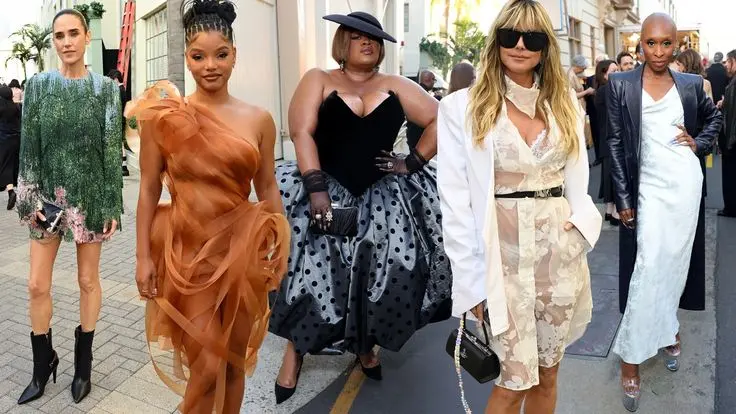
The Invitation Is a Puzzle. Here’s the Key.
Somewhere between the engagement announcement and the day itself, every wedding guest faces the same small anxiety: the invitation says “cocktail attire” (or worse, something creative like “dressy festive”), the couple’s idea of it may differ from yours, and the cost of error runs in both directions — the overdressed guest sweats in a ballgown at a barn wedding; the underdressed one is immortalised in photographs in jeans-adjacent trousers. Knowing what to wear to a wedding is mostly a decoding skill: each dress code has a reliable translation, a handful of universal rules protect you across all of them, and the venue-season-time triad fills the remaining gaps. This guide decodes every code you will realistically meet — black tie, formal, cocktail, smart casual, and casual — with outfit formulas for each, the accessory and shoe logic that finishes a look, and the etiquette landmines (including the colour rules) that no dress code line ever spells out. Keep it and the next invitation becomes an excuse to shop your own wardrobe first — which, if you keep a capsule as our capsule wardrobe guide suggests, may already contain the answer.
The Universal Rules (Every Code, Every Wedding)
Five rules stand above all dress codes. 1. Never wear white — nor ivory, cream, or anything that photographs white — unless the couple explicitly asks; it is the bride’s one protected colour and the rule has no statute of limitations or clever exceptions. 2. Respect the couple’s stated wishes over any guide, including this one: cultural or religious dress requirements at the venue, colour requests, and “no stilettos on the lawn” practicalities all outrank fashion. 3. Dress for the venue and the hour: an evening city wedding is inherently dressier than a midday garden one in the same code; grass rules out needle heels (choose block heels or wedges), beaches rule out heavy fabrics, and winter evenings forgive velvet that June would roast. 4. Comfort is strategy: you will sit, stand, eat, and dance for eight-plus hours — shoes you cannot dance in and dresses you cannot sit in are debts that come due publicly. 5. When torn between two options, choose the slightly dressier one — overdressed reads as effort; underdressed reads as indifference, and photographs are forever.
Black Tie and Formal: The Dressy End
Black tie is the most codified and therefore the easiest: for women, a floor-length gown is the classic reading (a very formal cocktail or midi dress in a luxe fabric passes at many modern weddings); for men, a tuxedo — or, where the invitation softens to “black tie optional,” a dark suit with a tie is the safe translation. Fabrics do the signalling: silk, satin, chiffon, velvet, and crepe read black tie; cotton and linen never do. Jewellery can finally be the good jewellery; shoes are formal heels or patent/leather dress shoes; bags shrink to clutches. Formal / black-tie-optional without the “black tie” words: women do long or elegant midi dresses, jumpsuits in formal fabrics, or tailored separates in evening materials; men do a suit and tie, with the jacket non-negotiable. The evening’s lighting is your friend: richer colours (jewel tones, metallics, deep neutrals) photograph beautifully after dark, while pale pastels wash out — save them for the daytime codes.
Cocktail and Smart Casual: Where Most Weddings Live
Cocktail attire — the most common code — means polished, knee-to-midi, and celebratory: cocktail dresses, elegant jumpsuits, or a dressy skirt-and-top for women; a suit (tie optional but recommended) or blazer with tailored trousers for men. Colour is freer here, prints are welcome, and personality is allowed — the line is simply “would this look at home in an upmarket evening restaurant?” If yes, it works. Smart casual / dressy casual is the code that causes the most errors because it sounds like an oxymoron; translate it as “smart restaurant lunch, elevated”: sundresses and midi dresses in good fabrics, tailored trousers with a blouse or knit, chinos or trousers with a blazer or unstructured jacket, loafers or clean smart shoes. The exclusions define it better: no jeans, no shorts, no trainers, no sportswear — at a wedding, “casual” never means what it means on a Saturday at home. For both codes, the accessories finish the sentence: one considered piece (a statement earring, a pocket square, excellent shoes) elevates separates into an outfit, and a smart coat or wrap planned in advance beats shivering in the good dress — winter guests, plan the coat as part of the look, not as an apology over it.
Casual, Beach, and the Honest Final Checks
Casual weddings (backyard, festival, registry-office-and-pub) still mean clean, intentional, and celebratory: a pretty day dress, a co-ord set, tailored trousers with a smart shirt; men in chinos or trousers with an open-collar shirt and optional blazer. The floor is “no denim, no athletic wear, no flip-flops” unless the couple has literally themed it otherwise. Beach and destination weddings add physics: breathable fabrics, hems that survive sand and breeze, sun protection considered at the planning stage (hats are outfits too at a noon ceremony), and shoes chosen for the actual ground. One more dimension worth planning: the outfit’s second performance. Photographs cluster at the ceremony and the first hour of the reception, so front-load your polish (hair, shoes, the unwrinkled arrival), and choose fabrics that recover — a dress or suit that still looks intentional at hour seven, after dinner and dancing, is worth more than a fragile showpiece that peaks at the church door. Before any wedding, run the final checks: Is anything white-adjacent? Does the outfit survive sitting, eating, and one enthusiastic dance? Have I checked the venue photos online for the real ground and weather reality? Am I one accessory from finished rather than one purchase from panic? Answer those honestly and you have solved the actual problem the invitation posed. Weddings are long, joyful marathons of photographs and dancing — dress like someone who intends to enjoy all of it, honour the couple’s one day of sartorial dictatorship, and be the guest whose outfit is remembered, fondly, for being exactly right.