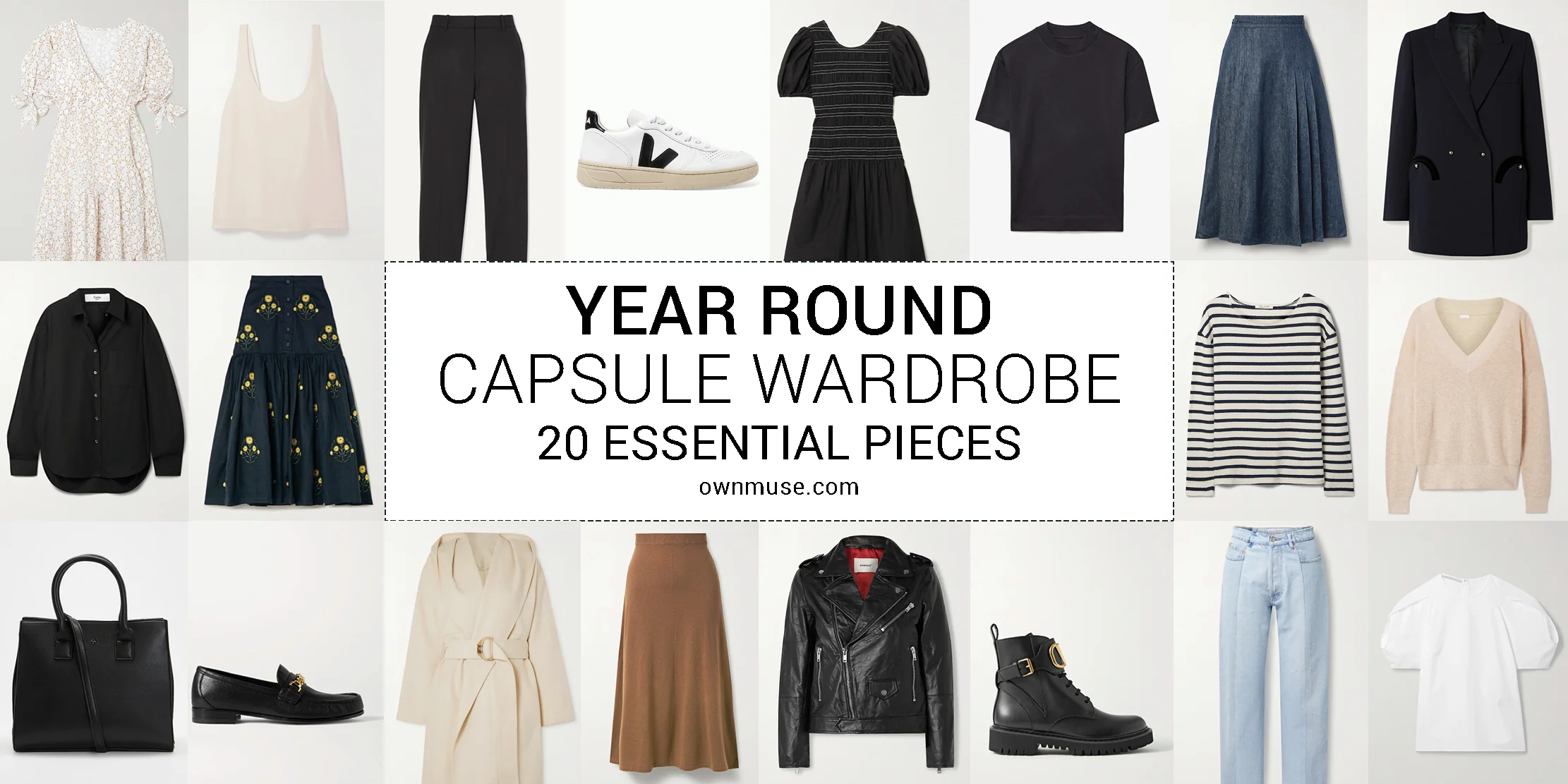
Most people wear a small fraction of their clothes most of the time, while the rest of the closet creates decision fatigue every single morning. A capsule wardrobe fixes that by keeping only pieces that fit, flatter, and work together. The capsule wardrobe essentials are not a rigid uniform or a specific number of items — they are a foundation of versatile clothing chosen around your real life, your colors, and your climate. This guide explains how to build one without throwing everything away in a dramatic weekend purge.
Start With an Honest Closet Audit
Before buying anything, take everything out — or at least work section by section — and sort with honesty. Keep what you wear and love. Release what has not been worn in a year, what no longer fits the body you have now, and what only works with three other specific items you do not own. The goal is not minimalism for its own sake; it is a closet where everything remaining has a job.
Pay attention to what survives. The survivors reveal your real style: the cuts you reach for, the fabrics you tolerate all day, the colors you actually wear versus the ones you buy aspirationally. That information is worth more than any shopping list, because capsule wardrobe essentials only work when they are chosen for the person you are, not the person a trend says you should be.
The Core Pieces That Carry a Capsule
While every capsule is personal, most are built on the same skeleton. Bottoms: two or three well-fitting trousers or jeans in neutral shades, plus a skirt or shorts depending on your climate. Tops: plain quality t-shirts, a couple of shirts or blouses, and knitwear that layers. A structured blazer and a versatile coat sharpen everything they touch. One or two dresses or jumpsuits that work day to evening cover social occasions without a panic purchase.
Shoes and bags should be few and hard-working: comfortable everyday shoes, one smarter pair, and a bag that goes with almost everything. Choose quality over quantity here, since these items are used daily and cheap versions show it quickly. When people ask what capsule wardrobe essentials really matter, the honest answer is fit and fabric — a simple piece that fits perfectly and drapes well will out-dress a fashionable piece that does neither.
Fabric and care decide whether core pieces survive capsule life. A capsule piece may be worn weekly, so it must tolerate frequent washing and still hold its shape: look for tightly woven cotton, wool blends that resist pilling, and lined trousers and skirts. Read care labels before buying, not after — a “dry clean only” top worn twice a week is a recurring expense disguised as a staple. Keeping a tiny repair habit helps too: replacing a button, fixing a hem, or treating a stain the same day extends a favorite piece’s life by years, which is exactly what a small, hard-working wardrobe depends on.
Build Around a Tight Color Palette
The secret engine of a capsule wardrobe is color discipline. Pick two or three base neutrals — black, navy, grey, beige, white — that dominate your core pieces, then add two or three accent colors that flatter you for tops, scarves, and accessories. When everything coordinates, the number of possible outfits multiplies even as the number of items shrinks.
This is also where personal pieces shine. A neutral wardrobe is the perfect backdrop for one item with genuine character, whether that is a vintage jacket or jewelry with a story behind it — the kind of piece explored in this piece on the meaning and style of the Claddagh wedding ring, where a single ring carries love, loyalty, and friendship in its design. Capsules are not about erasing personality; they are about giving your personality a stage where it can actually be seen.
Shop Slowly and Fill Gaps, Not Impulses
Once the audit and palette are done, write a short gap list: the specific items that would unlock more outfits from what you already own. Maybe it is a white shirt that makes three bottoms work, or boots that carry summer dresses into autumn. Shop only from that list for a while, and notice how different buying feels — deliberate, almost boring, and dramatically more successful.
Apply the same patience to how you evaluate sellers and trends. Just as smart shoppers learn to judge marketing claims before spending — a skill this site has explored in the context of how SEO knowledge helps entrepreneurs evaluate marketing work — capsule shoppers learn to judge “must-have” fashion marketing before it empties their wallet. A trend earns a place in your capsule only if it matches your palette, your body, and at least three outfits you can already picture.
Maintain the Capsule With Simple Habits
A capsule wardrobe stays useful through small habits rather than annual overhauls. The one-in, one-out rule keeps the total stable: a new piece joins only when a similar one leaves. Seasonal rotation — storing heavy winter knits in summer and vice versa — keeps the daily closet uncluttered and makes the change of seasons feel like new clothes arriving.
Finally, review twice a year. Bodies change, jobs change, climates and tastes change, and your capsule wardrobe essentials should change with them. A fifteen-minute review each spring and autumn — what did I actually wear, what annoyed me, what gap kept appearing — keeps the system honest. The reward is quiet but real: mornings with no drama, a suitcase that packs itself, and the confidence of knowing that everything hanging in your closet is something you would happily wear today.
Conclusion
Building a capsule wardrobe is less about owning little and more about owning what works. Audit honestly, build on versatile core pieces in a tight color palette, let one or two personal items carry the character, and shop slowly from a gap list instead of from impulse. Maintain it with one-in-one-out and a twice-yearly review. The capsule wardrobe essentials are simply clothes that fit your body, your colors, and your life — chosen once, chosen well, and worn with ease every day.